Monday, September 4, 2017

Top 15 of the 1950's

Top 15 of the 1950's:

15. The Red Balloon (1956) directed by Albert Lamorisse

I remember as a child being fascinated by silent passages in movies. I am still to this day intrigued by completely visual film making. I think this all started with French director Albert Lamorisse's sweet 1956 masterpiece The Red Balloon. It was shown throughout American elementary schools from the 60's to the early 90's (and should still be shown to kids today, if you ask me), and I was one of the many children that the movie made a huge impression on. It's the story of a young kid, who finds a balloon caught on a light post on his walk to school. He frees it and soon finds out the balloon has a mind of its own, which it uses to follow him to school and play games with him and be the friend that he so desperately needs.


Of course, one of the calling cards of the movie is its script. It won the Oscar for Best Original Screenplay, despite having lines of dialog in the single digits. It's nearly silent (and could've been completely had Lamorisse wanted to do so), and is all the more magical for it. It's a simple movie, but one that plays to our recollections of childhood and the feelings of finding a new friend. The Red Balloon is one of the great gifts of cinema. Its magic realism and understated brilliance has kept me coming back to it over and over again through the years. It gives me that wonderful fuzzy feeling inside that you just get from so few movies. Or, as critic Owen Gleiberman so wonderfully put it, "More than any other children's film, The Red Balloon turns me into a kid again whenever I see it...to see The Red Balloon is to laugh, and cry, at the impossible joy of being a child again."

14. The Searchers (1956) directed by John Ford


Usually thought of as THE western and one of the greatest movies ever made, The Searchers only comes in at #14 on the list because the older I get the more I dislike the unsuccessful comic relief as well as the B-story of Martin and his bride and all that. Those are the things that Roger Ebert said "This second strand is without interest, and those who value The Searchers filter it out, patiently waiting for a return to the main story line." But the more I watch the movie the harder it is to filter that stuff out because it simply doesn't work, and is put in contrast to the main storyline, which is the greatest and most iconic in western history. The movie contains John Wayne's best performance, as the racist Ethan Edwards. He's powerful and mysterious and unlikeable. A great character and great work to prove that Wayne was a terrific actor when in the right circumstances. It's also John Ford's most beautiful movie, utilizing Utah's Monument Valley in gorgeous color. So, its A story is the best western ever made, but the B story brings it down overall as just my #14 of the 1950's.

13. Elevator to the Gallows (1958) directed by Louis Malle

The debut of future legend Louis Malle, it stars Jeanne Moreau and Maurice Ronet as Florence and Julien, secret lovers planning the murder of her powerful husband (his boss), only to have their perfect plan slowly unravel over the course of the movie's 91 powerfully tense minutes. A haunting, lonely score improvised by Miles Davis sets the backdrop of inevitable tragedy in the lives of our characters. Moreau, who didn't do anything for me in Truffaut's Jules and Jim, here uses her strangely attractive features in a wonderful performance of a woman hoping and searching and afraid for the safety and whereabouts of the lover she can't find, almost going mad with worry. Because, after the murder of her husband, Julien spends the night trapped in the elevator of the building in which he'd just committed the crime.


Gorgeously shot, tautly directed (by just a 24-year-old Malle), expertly acted and painfully tragic, it has all the hallmarks of the great noirs of years past and deserves to be remembered alongside them, above most.

12. Strangers on a Train (1951) directed by Alfred Hitchcock

Hitchcock’s most underappreciated masterpiece, Strangers on a Train (adapted from the debut novel by Patricia Highsmith, future writer of “The Talented Mr. Ripley”) features one of the great villains of all time in Robert Walker’s Bruno Anthony. Bruno meets famous tennis player Guy Haines (Farley Granger) on a train one day and the two begin talking. Knowing that Guy is going through a messy divorce, and eager to get his own father out of the way, Bruno proposes an idea to Guy. Since neither man knew the other before meeting on the train, so neither can be tied to the other by the police, why don’t they trade murders? Bruno will take out Guy’s wife, and Guy will murder Bruno’s father. Guy uneasily laughs off Bruno’s offer, but when Bruno comes through with his end of the agreement, he expects Guy to hold up his end, whether Guy agreed to it or not.


Robert Walker is truly fantastic as the spoiled, but dangerous Bruno, who is surprised when Guy isn’t happy that his wife has been murdered. And Farley Granger gives off the aura of a kind of weak willed everyman who is in way over his head, making us not sure whether he’s going to prevail. Strangers on a Train is required viewing for any Hitchcock fan, and is one of the great suspense movies of all time.

11. Some Like it Hot (1959) directed by Billy Wilder

Two broke musicians are witness to the St. Valentine's Day Massacre and must go on the run as mobsters chase them through Prohibition-era Chicago, all the way down to Miami. Doesn't exactly sound like the premise of one of the great comedies of all time, but it is. Everyone knows by now that the musicians are played by Jack Lemmon and Tony Curtis, who disguise themselves in drag, meet Marilyn Monroe, and hijinks ensue.


Curtis and Monroe are both pretty and charismatic enough that their story is engaging (Monroe in particular, no matter what problems there were getting her to this performance), but it's Jack Lemmon who makes this movie really shine. His flawless comic timing and fearless work opposite pervy Joe E. Brown that takes things over the edge. The absolutely perfect ending "Well, nobody's perfect", despite knowing that that was the ending line, had me rolling on the floor laughing (not figuratively) at this Billy Wilder masterpiece.

10. Ashes and Diamonds (1958) directed by Andrzej Wajda

Andrzej Wajda's 1958 masterpiece Ashes and Diamonds was a really terrific time at the movies. It stars "The James Dean of Poland" Zbigniew Cybulski as Maciek, an assassin at the end of WWII tasked with taking out communist leaders in Poland, alongside his friend/mentor/superior officer Andrzej (Adam Pawlikowski). However, Maciek soon falls for the sexy barmaid Krystyna (Ewa Krzyżewska) at the hotel in which they are staying. The man they're supposed to kill is staying there too, and there are a lot of close calls as Maciek and Andrzej try to figure out how to assassinate this man, or if with all the killing done in the war if it is even worth it (in this way it's very much a precursor to Spielberg's brilliant Munich).


Shot like the noir films that had lost their popularity at the time, but with a realism in acting and setting that really grounds everything as much as possible. It's a beautiful movie to look at, one that Martin Scorsese has listed as one of his 10 favorites ever made. I would and will watch this masterpiece again over the years, as there really isn't a single weakness in it. It's a pretty perfect movie.

9. Ikiru (1952) directed by Akira Kurosawa


Akira Kurosawa's first movie on the 1950's list (though not his last), Ikiru is one of those movies that just hits you in the gut. A man finds out he's dying and is inspired to try and do something worthwhile in his life before he dies. He tries to connect with people, including his children, but not many are interested in connection. We all want to connect and we all hope our memory lives on long after us, and this is the movie that really explores a man reaching for meaning at the end of a life wasted. Powerful stuff, brilliantly made by Kurosawa. This is one of the movies that proves he made much more than just samurai movies.

8. Night of the Hunter (1955) directed by Charles Laughton


This beautiful nightmare of a movie was sadly the only directorial effort from the great actor Charles Laughton. Expressionistic, strange even today, and containing Robert Mitchum's greatest role as the villainous Preacher Harry Powell. Sadly a critical and commercial flop upon its release, its reputation grows with each passing year. Legendary French film magazine Cahiers du cinéma in 2008 put it only behind Citizen Kane as the greatest movie ever made.

7. On the Waterfront (1954) directed by Elia Kazan


Occasionally pieces of cinema become such parts of pop culture that people forget even where it came from or the piece loses its power from repetition. Upon first viewing On the Waterfront, I expected the climactic "I coulda been a contenda" speech to be one of those for me. Instead, I found myself weeping at the loss and disappointment Terry Malloy felt in himself and in his brother Charlie. "I coulda been a contenda" isn't even the important part of the speech, it's when Terry says "You was my brother, Charlie, you shoulda looked out for me a little bit. You shoulda taken care of me just a little bit so I wouldn't have to take them dives for the short-end money." It's a devastating scene, and delivered by Marlon Brando in what I believe is the greatest screen performance ever given.

6. Rio Bravo (1959) directed by Howard Hawks

This is one of the most entertaining movies I've ever seen. Howard Hawks' famous quote about what makes a great film was "3 good scenes, no bad scenes" and he was a master at putting that into practice. I don't know that I could single out what the best scene in the movie is, but I can sure as hell tell you there's nothing in the 141 minutes I'd cut out.


John Wayne is terrific here, even if his juicier role in The Searchers is his best work as an actor. He feels like he really would be the sheriff of this small town about to be under siege. Dean Martin should've had a Supporting Actor Oscar for his work as the drunken deputy Dude. Walter Brennan adds some wonderful comic relief, and even Ricky Nelson is wonderful as the quick shooting Colorado. When he and the boys have a little musical interlude before the carnage of the finale, it doesn't feel shoehorned in because Nelson was a teen idol at the time and Martin a legendary singer, it works for these characters. It's simply terrific all around and one of those movies I'd gladly watch any time anywhere.

5. Rififi (1955) directed by Jules Dassin


The fifth of seven non-English language movies on my 50's list, the blue print for all subsequent heist movies came from Blacklisted American Jules Dassin, directing in France because that's the only job he could get. It's a story you've seen many times since, but never as well, with a terrific lead performance from Jean Servais, and my favorite role in the movie, that of the Italian safecracker, played by Dassin himself. The calling card of the movie is the 30+ minute silent heist itself, a brilliant piece of filmmaking that none of its imitators can match. It's simply a genius movie.

4. Seven Samurai (1954) directed by Akira Kurosawa


Generally considered Akira Kurosawa's greatest triumph, again the 1950's show their strength that it's only #4 on this list. Endlessly mimicked and ripped off, Kurosawa's tale of a small group of heroes protecting a village from bandits was the biggest movie ever in Japan upon its release, and a huge success worldwide as well, despite its 3 1/2 hour runtime. Having written about it multiple times before, I won't belabor the point here, just safe to say that its reputation is well deserved, even if it's only my personal #2 from the Japanese master.


3. Singin in the Rain (1952) directed by Stanley Donnen and Gene Kelly

I don't love musicals. but when it comes to Singin' in the Rain, what's not to love? Gene Kelly is as charming as he can be, Donald O'Connor is like a walking cartoon, Debbie Reynolds is as plucky as anyone has ever been, Jean Hagen is hilarious and hissable, the script is light hearted and fun, it's gorgeously made, and the songs are pretty good too. As usual, the only negative was the big dance number Kelly threw in at the end of the movie, killing the narrative momentum and unnecessarily padding the runtime. Still, when Debbie Reynolds tries running away and Gene Kelly shouts to the audience "stop that girl, that girl running up the aisle. Stop her! That's the girl whose voice you heard and loved tonight. She's the real star of the picture. Kathy Selden!" the way it's staged and filmed is simply as perfect a moment in movie history as has ever existed.

2. Throne of Blood (1957) directed by Akira Kurosawa

Akira Kurosawa loved Shakespeare, even if he thought he was "too wordy", and the master's adaptation of MacBeth into a feudal Japan set samurai movie is one of the great mood pieces of the movies. It's foggy and dark and has that great supernatural sense of doom that the Bard's play has. It also has one of the great finale's in movies.

1. Vertigo (1958) directed by Alfred Hitchcock


One of the most beautiful movies ever made, containing two performances that both ended up in my top 10 leading performances lists, Hitchcock's masterpiece was voted in the 2012 Sight and Sound poll as the greatest movie ever made, unseating Citizen Kane, which had held the spot since 1962, just a few years after Vertigo came out. I don't have it as my #1 movie of all time, but it's in my top 5 and definitely the best movie of the 1950's.

Tuesday, August 22, 2017

Talk to Her

A bit of a re-write/expansion from a previous thing I'd written on this movie, expanded for my BoxOfficeProphets.com column Hidden Gems.

Life. There is so much LIFE in this movie. Pedro Almodovar’s 2002 capital-M Masterpiece Talk to Her is the kind of movie that reminds us how perfunctory and utilitarian most movie characters are. They say things only that advance the plot or maybe because they sound cool, but those characters aren't real. They don’t say or do things that matter or affect us. They don't exist even in our imaginations. They exist on screen and then disappear immediately once the credits roll. Their actions are, ultimately, boring and inconsequential. And if it is full of characters you don’t care about, a movie isn’t going to work as a whole either. This movie makes other movies look bad, because this movie is filled to the brim with the energy of life. There is a plot, sure. There's also high drama, sensuality, pain, love, beauty, romance, plus dick and poop jokes.

Marco (Dario Grandinetti) is a journalist who comes across the famous bullfighter Lydia González (Rosario Flores) and decides to write a piece on her. They meet, become friends, and then lovers. But one day, Lydia is gored by a bull and goes into a coma. She is transferred to a care facility and Marco visits her often. While at the hospital, he meets Benigno (Javier Camara), a kindly male nurse who is exclusively taking care of Alicia (Leonor Watling), a ballet dancer who is in a coma as well. Benigno jabbers away to Alicia as though she were alive and engaging in the conversation. He pours his heart out to her, loves her, and is devoted to her care. Marco and Lydia are just a few months into a relationship, both coming off of previous long term loves, and his relating to the newly comatose Lydia is difficult for him.

These four people are wonderfully drawn contrasts of each other. Alicia is a ballet dancer, Lydia a bullfighter. They’re both strong, athletic, emotional. But where Alicia is delicate and elegant, Lydia is bold and brash. Alicia is the embodiment of one of the most feminine images in the world, a ballerina. Lydia is strong, confident, and successful in the very manly world of bullfighting. Benigno, even outside of being a man in the predominantly female world of nursing, is caring, loving, also a bit doughy and possibly gay. Marco is more world weary, masculine in look, and seems cynical. But we’ve also seen him cry multiple times and know that there’s a wealth of emotion in there if he could just let it out.

Benigno is a perfect caretaker of Alicia. Marco is unsure of what to do when he visits. But the men bond over the care of the women (yet another gender role switch by Almodovar), which mostly consists of Benigno trying to get Marco to do more than just physically show up. That's where the title comes from, as Benigno tries to get Marco to further his connection with Lydia, even if she can't respond to him. I won't go into what happens plot wise beyond this point, but it was unexpected yet never hit a false note. I will add, though, that this has the greatest movie-within-a-movie in the history of cinema. A sexy laugh riot of ridiculousness that takes on much greater significance when you realize what it may mean and how it may be paralleling what is happening when the movie is being recounted from one character to another.

Pedro Almodovar was always known for his bold colors, and even bolder choices in characters and themes (pregnant nuns, transsexuals, junkies, kidnappers, multiple NC-17 rated movies). He was also accused of being melodramatic and not caring about his characters, or not creating characters that feel real. His early movies like 1990’s Tie Me Up, Tie Me Down put both he and star Antonio Banderas on the international movie map, but it wasn’t until his astounding 1999 movie All About My Mother, which won him a Best Foreign Language Film award at the Oscars, that he really stepped up into his full potential. He far surpassed it with Talk to Her, his follow-up film.

When I first saw it, this was the third movie I'd seen from Almodovar, and while I liked the previous two a lot (2006's Volver and 2009's Broken Embraces, both starring Penelope Cruz) this one is truly, deeply special. Made in 2002 after the international success of All About my Mother, Almodovar won another Oscar, this one for Best Original Screenplay, for Talk to Her and he thoroughly deserved it. As I said in the intro, he’s written so much life into this movie. It’s not just the terrific acting and extreme story circumstances that make this world seem so full. It's sharply drawn in its writing. Funny, moving, unexpected in both dialog and story structure. Add onto that Almodovar's impeccable camera movement and framing, his genius unfolding of the story, his famous boldly colored cinematography, and especially the perfect performances he elicits from his actors. It’s all deeply moving and extraordinary at every level. Many consider this Almodovar's high point and I'll not only agree, but say that this is the best Spanish language movie I’ve ever seen.


Sadly, foreign language movies aren’t always the easiest sell to American audiences. But Talk to Her is funny, I laughed out loud many times. If you watch him in interviews, Almodovar himself is very funny, in English or Spanish. Most of all, I think, this movie is empathetic. We come to know these people, care about them, want them to succeed and also to connect with each other the way we’ve connected in the audience. It’s a gorgeous movie to look at, and when the plot thickens, as plots do, you realize how much you’ve come to care for these characters in ways that are unusual for even the best works of art. I really can’t recommend it enough. I love love love this movie.

Wednesday, August 9, 2017

Top 15 of the 1940's

Top 15 of the 1940's:

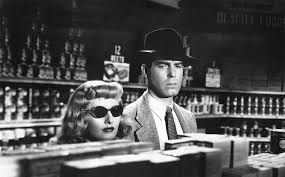
15. Double Indemnity (1944)
Famed film critic Leonard Maltin called it the "best film noir". I disagree (my choice is coming up), but it is a great one, one of Billy Wilder's best movies, which is really saying something. It's one that has no real flaws in it. Fred MacMurray is a wonderful leading man, Edward G. Robinson is his always tremendous self, and Barbara Stanwyck is the standard bearer femme fatale. Well shot, well written, I love it, just maybe not as much as its all-time reputation might hype up.

14. Bambi (1942)
A movie that really impresses with its care and detail. The changing of the seasons is lovingly animated and told, the shooting of Bambi's mother is as emotional as ever, and the frightening and thrilling forest fire is as impactful as ever. Not the best Disney movie of the decade, but a classic for a reason. One I didn't have a ton of love for or connection to as a child, but one that is really impactful as an adult.

13. Foreign Correspondent (1940)
This is probably Alfred Hitchcock's most sadly forgotten masterpiece. It's a thrilling adventure, one I much prefer to his more famous 1940 movie, Rebecca. The classic umbrella sequence, as well as the plane crash (one of Hitch's best sequences, period) as well as the deliciously evil turn from future Santa Claus Edmund Gwynn help to make this one of the Hitchcock movies I always recommend, as even too many Hitch fans haven't caught up to it.

12. Act of Violence (1949)


Act of Violence concerns itself with the guilt and anger felt by two soldiers who survived the horror of a Nazi P.O.W. camp. One of the soldiers, Van Heflin's Frank, was the leader of the group that'd been shot down by the Germans. Robert Ryan plays Joe, the only other man to make it out of the camp alive. Joe blames Frank for the deaths of the other men, and has tracked him down relentlessly in a bid to right the thing he feels has been wronged. Frank moved his family from Syracuse, New York all the way to southern California just to get away from Joe's vengeful quest, assuring himself that Joe won't continue following.

Frank's survivor's guilt must've been mirrored by that of legendary director Fred Zinnemann, who'd escaped the dangers of WWII with his brother just 10 years previous to Act of Violence, but lost both of his parents in concentration camps. Van Heflin's wonderfully layered performance carries the movie, especially in the scene where he explains to his wife Edith (Janet Leigh, in her first role of significance) exactly why Joe blames him for the soldiers' deaths, and what he's been carrying around with him since then. Robert Ryan is creepily effective as Joe, single minded in his pursuit, to the point that he tells his girlfriend he just doesn't love her enough to care what she thinks about his intent of violence retribution. It's a really tremendous noir flick that needs to be seen by more people.

11. Key Largo (1948)


The less famous of the John Huston/Humphrey Bogart noir collaborations (plus Lauren Bacall in the final Bogie/Bacall pairing), Key Largo is a terrific movie. Bogie has long been one of my favorite actors, and this is one of his best performances. He had one of the most emotionally expressive faces I've seen, and we see so much play out in his eyes and his facial "body language" as his disillusioned WWII vet Maj. Frank McCloud struggles with discovering a reason to fight, in this case against famous gangster Johnny Rocco, deliciously played by Edward G. Robinson, who is keeping a small hotel full of people hostage as a small hurricane passes through.

Playing as a sort of oppositely cast version of The Petrified Forest (an underrated sort of pre-noir which served as Bogie's big break as the gangster holding people hostage, it was also the movie that made me fall in love with Bette Davis), Key Largo plays out more fascinatingly with Bogart and Robinson playing a sort of cat-and-mouse/battle of wits game that plays out with about as high a body count as a claustrophobic movie like this can manage.

10. Monsieur Verdoux (1947)
One of the great dark comedies ever made, it was an idea Orson Welles had for a movie that he wanted Chaplin to star in. Chaplin had not often been directed by anyone but himself, and wasn't gonna start at the age of 58, so he bought the script, re-wrote it, directed it, starred in it, and wrote the score for it (a typical day at the office for control freak Chaplin). It's the story of a man who marries women, kills them and takes their money. It abides by the production code of the day by not letting Chaplin get away with it, but coming out just after WWII, Chaplin can't help commenting "One murder makes a villain, millions a hero." I've only seen 2 Chaplin movies I would call "genius". And while I think his The Gold Rush is superior to this, Monsieur Verdoux is certainly his other.

9. Stray Dog (1949)
The earliest of Kurosawa's many masterpieces, Stray Dog is about a young post-war Tokyo cop who has his gun stolen on the train home one hot summer day. This gun later turns up as the murder weapon in another case, and sends the young officer on a manhunt to find who stole his gun. One of Kurosawa's under appreciated non-samurai movies, Stray Dog has a palpable sweat to it, evoking those unbearable summer days and humid nights. Wrapping that setting around a cop movie was a good choice, and having his favorite actors Toshiro Mifune (as the young cop) and Takashi Shimura (as the veteran helping him out) as his stars was a typical bit of brilliance.

8. Beauty and the Beast (1946)
The earliest screen take on the famous fairy tale, Jean Cocteau's movie is magical in every sense of the word. He created a fairy tale real world, where Belle comes from. And he created a darker, slightly creepier, but also whimsically fascinating world for the Beast's castle. The basic outline of the movie will be familiar to most people thanks to the famous Disney take on it, so there's no need for plot description, but I'll say that Cocteau took me to a world I wanted to see more of, and told me an engaging and delightful tale while I was there.

7. Mickey and the Beanstalk (1947)
So I'm allowing a few short films to sneak onto my lists here and there, and I think Mickey and the Beanstalk is a perfect one to let sneak. It's joyous, fun, memorable, and never loses re-watch value. I watched this short countless times as a child and now revisiting it as an adult I find it just as magical and funny and lovable.

6. Citizen Kane (1941)
What more can really be said about this, likely the most talked and written about movie in cinema history? I'll just quickly posit that obviously I don't put it as one of the 1 or 2 greatest movies ever made, it is most definitely a great movie. Orson Welles' work as director is incredibly ambitious and impressive, his work as writer nearly flawless, but it's his central performance as Charles Foster Kane that really carries this textbook of a movie. He doesn't need the aging makeup he's put in, he believably takes us through different stages of Kane's life with just body language and voice control. It's truly amazing work on every level from a man who was only 26 at the time. And for those who haven't seen it, yes Rosebud was his sled, but what does that mean?

5. Fantasia (1940)
A movie that I always wanted to see as a kid but was told I wouldn't like it, it was just animation with classical music and not a standard Disney story or anything. I thought that sounded great but I still wasn't able to see it until the age of 32. It was even better than I could've imagined. It's like the best ballet you could ever dream up. The animation tied to the music so much that they become of a single piece. I could actually do without the introductions by the music conductor, that's probably my only complaint. Each section needs some sort of break between them, but I would've been fine with a fade to black, moment of blank screen, and fade up into a new section. Regardless, the movie is gorgeous to look at, as transportational a viewing experience as you'll ever have.

4. He Walked by Night (1948)
Probably the most unfairly overlooked noir movie ever made. Serving as the blueprint for Dragnet's use of real police files, and having that shows creator and star Jack Webb in a small role, He Walked by Night is a fascinating police procedural noir with some striking cinematography, terrific performances, and a tightly wound script that never lets up, even if it only lasts 79 minutes.

Credited to journeyman filmmaker Alfred L. Werker, but directed at least in part by the legendary Anthony Mann (reports conflict on how much), the calling card of the movie has to be its finale, a flashlight lit chase through the L.A. storm drain system that shames the more famous, and very similar, chase at the end of The Third Man, released the following year. See this movie.

3. Miracle on 34th Street (1947)
Everyone has that movie that just makes them feel good. No matter what your mood is, no matter what's going on in your life, you can watch it and feel thoroughly good. Well, this is that movie for me. It's just so joyous and uplifting and happy, just like Santa Claus. I watch it every holiday season and my love for it only grows.

But as a movie buff I couldn't put it on the list if I didn't admire it from a filmmaking perspective too. It's got a tight script, is nicely photographed, and the acting by everyone involved is top notch. Edmund Gwynn IS Santa Claus to so many for a reason, and this Oscar winning performance will show you why. Natalie Wood gives one of the best child performances ever, Maureen O'Hara is her usual wonderful self, and John Payne is a great sense of decency next to Gwynn (who is really what makes this movie shine). So it satisfies anything I could want from it.

2. Notorious (1946)
One of the great performances from one of our greatest stars, Ingrid Bergman, is contained right here in one of the most low-key spy stories the movies have ever given us. It's really not a spy tale at all, it's the story of love and how these two people let their jobs get in the way, and put their country above themselves just long enough for things to get all screwed up, while we hope that they get out of it in the end. It's a nearly perfect movie, in my eyes, with Cary Grant's career best work, and Bergman's only being surpassed by another movie on her resume...

1. Casablanca (1942)
No surprise here, as this movie is in my all-time top 10. It took me a long time, in movie lover years, to finally catch up to it. It was one of those movies that you always hear is so great, so I resisted watching it for a long time because I was afraid of being disappointed. Instead, I was blown away. One of the great love stories, that of lost love, and time passed, and old hurts coming back to haunt you. The Bogart performance that should've won him an Oscar. Ingrid Bergman is luminous, you can see why the men are drawn to her. It's been called the greatest screenplay ever written, and in fact much of the dialog has so entered popular culture that I recognized nearly every scene upon my first viewing of the movie. But that didn't diminish it at all. Definitely the best movie of the 1940's in my book.

Friday, August 4, 2017

The Matrix


So I rewatched The Matrix last night for the first time in 10-12 years. I'd seen the movie opening weekend, and multiple times over the next few years, but it had been a long time. The wife has called it her favorite movie but she hadn't seen it in a long time either and we'd been meaning to watch it together for years but didn't get it done until last night.


I'll start with some of the good. The beginning of the movie is pretty terrific. Trinity escaping from the agents especially. Running over the rooftops (sets reused from the great Dark City, shot on the same studio lot in Sydney), it's exciting, intriguing, and Carrie-Anne Moss is badass and wonderfully balletic and awesome to watch. When we are introduced to Neo, there's still a mysteriousness that really works well, and then seeing Trinity rope Neo into her world with such effortless sexiness and intelligence. I was beginning to think I'd been wrong about the movie all these years because this was truly terrific.


The Wachowski's set up the plot beautifully in letting Neo go down the rabbit hole into finding Morpheus and taking the red pill. Then comes the introduction of the machines they will rage against, and the training Neo undergoes to combat the machines. Unfortunately, this is where the movie starts to go off the rails as it abandons the philosophy and mystery and becomes the big dumb action movie it was setting up to be all along.


This is also where the movie forgets about Trinity being a certified badass and shushes her to the background for Morpheus and Neo to take over as the lead characters (it's a big dumb action movie, after all, and we can't have a woman taking center stage too much). The training sequences go well, the action scenes throughout are all very well made, but there's nothing there outside of the surface level action. The movie still keeps its endless referencing of other works of art, but forgets that there are characters it had been introducing and needing to deepen. Nope, any and all character development is done by this point. Barely sketched as archetypes, the characters end up as nothing but plot points. For example, why is Trinity in love with Neo? We are given no interactions with them that would suggest any sort of connection, much less a world opening kind of love. As my wife said, their relationship arc is essentially "you're pretty, I love you." Yeah, fuck it, they're both tall, thin, dark hair, light skin, pretty people (honestly they look so much alike they'd pass better as siblings than lovers). Yeah so they're in love. Why? Because plot.


The second half of the movie is just dumb action. And it's well shot, the VFX are good (though dated and obvious in many cases, they're still visually used well and work in context), and the actors are all committed to their non-characters. But there's nothing there to make me care about it. There's a lot of shots that tell us the filmmakers were thinking "isn't this shit blowing up and getting shot in slow motion like super awesome?" Eh, it's okay. But it's mindless action in a movie that set us up with something on its brain. This is why it's even more disappointing than most big dumb action movies that have nothing on their mind. The Matrix is set up as a movie that has something to say, but ultimately says little more than "isn't this cool?"

Then there's the point of the plot of Neo being "the one". Why is Neo the one? Because the plot says so. What makes him different than the others? Because the plot says so.


It would've been a more interesting development of the plot if everyone in the crew had had the same God-like powers Neo eventually develops. And they then have to battle the super-villain baddies in the form of the Agents. All Neo does is "free his mind", why couldn't they all have done that? Why weren't they all already there before Neo ever showed up? They know The Matrix isn't real, there's nothing to keep them from the God-like powers Neo possesses except that the plot wants to make Neo into computer Jesus. But the group all do the big jumps (or I guess we only see Trinity and Morpheus do that, but still), it's just that Neo has more of that ability? Why? The rest of the crew have obviously freed their minds enough to bend the rules of reality, why don't they just out and out break them?


This lends all the action scenes an inherent idiocy and pointlessness. Why doesn't Neo just wave his God hand and swipe away the agents and the bullets? Why does Trinity get scared about people chasing them? It's not real, they could fly away, or just imagine the biggest guns. For that matter, the bullets aren't real and they know it, so why bullets at all? When battling hand to hand in the subway fight between Neo and Agent Smith, Smith punches Neo in this video game-esque hurricane like punches. Why not punch that punch all the time? When you set up a world that isn't real and put superhero-like characters in it who then don't use their superpowers, it just causes confusion and frustration to the viewer.


So The Matrix introduced a ton of interesting concepts and thoughts into pop culture. Sure, none of the ideas are original but how many ideas really are? Expecting originality from a big blockbuster movie is too much pressure to put on a movie. And the ideas were taken from various philosophical and classic sci-fi sources the world over (Plato, William Gibson, Phillip K Dick, the animes Akira and Ghost in the Shell, among many others). Isn't that what good artists do? Take from a multitude of influences and repackage it through their own lens? The Wachowski's introduce these things into popular culture and use them well in the movie until they abandon them completely for Michael Bay-isms of big dumb action and stuff getting blowed up real good.

But I still can't rate the movie anything above a 5/10 because it just squanders all of the good will it had built up inside me in the first act. It's not bad otherwise, just dumb and pointless. But what a first act!

Thursday, May 11, 2017

Don't Think Twice

The newest addition to my Hidden Gems columns over at BoxOfficeProphets.com


Writer/director Mike Birbiglia’s 2016 film Don’t Think Twice is the exact kind of movie the Hidden Gems column was made for. It’s a small, low-key, almost bittersweet look at the life of a group of performers in the improv comedy scene in New York City. The movie has a lot of comedy in it, both in the kind that’s funny and in the kind that we observe the group performing. Overall it’s also kind of a drama, but not really. It’s one of those great types of movies that reflects life in the most human and beautiful way. There’s friendship and love and jealousy and supportiveness and misfits-making-a-family and all other kinds of wonderful themes and behaviors.

We first see the improv group The Commune backstage getting ready for a show in the small theater they rent. Miles (Birbiglia) seems like a kind of leader of the group, though it’s Sam (Gillian Jacobs) that MC’s and takes suggestions from the audience. Sam’s boyfriend Jack (Keegan-Michael Key) is the charismatic “star quality” type performer of the crew, while Allison (Kate Micucci), Lindsay (Tami Sagher), and Bill (Chris Gethard) fill out the rest of the scenes with able supporting work. But, of course, in the world of improv, there are no stars, because it’s not about the individual, it’s about the team and the overall performance and success of the show. That is until word comes one night that a producer from Weekend Live (the SNL stand-in for the movie) will be in the audience, scouting for talent.
We see what happens to the group as it begins to splinter when Jack gets the gig on Weekend Live. He is raised to a whole new bar of performance, one which the Commune gathers around the TV to hate-watch every week, simultaneously proud of Jack, jealous of his success, and disgusted at the lowest common denominator comedy. Jack, meanwhile, now has to navigate the cutthroat world of “me first” comedy that’s totally antithetical to the community that got him there. Miles becomes bitter, because he was Jack’s teacher. He should have that success, he taught Jack everything he knows (obviously ignoring the work Jack put into his craft, along with his natural charisma, and is a stance that hurts Jack's feelings, though he doesn't say it). Sam starts to see her relationship with Jack (lovingly handled in touching moments of subtlety by Birbiglia as a director) slowly crumbling away as Jack’s work schedule and their conflicting ideas and ambitions clash. Jack isn’t trying to leave behind his cohorts, in fact he’s willing to stick his neck out to try and at least get the others in the group onto the show as writers, despite repeatedly being told not to do that by those behind the scenes of the new show. Still, resentments and tensions rise, and relationships are put to the test, sometimes even during the performance of the show.

Just the story of Jack, Sam, and Miles is enough to make a good movie about, but Birbiglia as a writer also doesn’t skimp on characterizations of the other three in the group. Bill, Allison, and Lindsay are all given wonderfully written subplots so that we know who they are (and all three actors give really terrific and heartfelt performances too). They aren’t there just to fill out the scenery, these are all real people we come to know over the 92 minute runtime. And this is really solid writing, not just the “give each person one defining characteristic so that the audience can easily keep up” type mainstream comedy writing we’re so used to. It’s a wonderful ensemble of characters, each brought to amazing life by the cast.
Though I must admit, even as improv is a group activity, the stars of the movie are Gillian Jacobs and Keegan-Michael Key as Sam and Jack. Jacobs’ huge eyes and delicate delivery lets us into Sam’s journey of owning her own power and talent and where she fits in the world. She is luminous in the role and I hope gets some real acting work from it as well, I’d love to see more of her. Key, as Jack, is truly extraordinary in his ability to show the rumbling, boiling, overflowing thoughts and ideas and emotions going on inside Jack that he may or may not share with Sam or the rest of the group. There are scenes that brought tears to my eyes in the humanity that Key brings to the role. Having only known Key from his work on Key and Peele and MadTV, I did not expect the depth of characterization he brings to Jack. Jack is complex and fascinating and that he gets to bounce off of the same qualities coming from Jacobs’ Sam is all the more intriguing and delightful to watch.

Mike Birbiglia is a stand-up comic by trade, that’s how I first came to know him with his specials like What I Should’ve Said Was Nothing, My Girlfriend’s Boyfriend, and multiple Comedy Central Presents showcases. He was always funny, but also often sprinkled in some poignancy and heart into the stories he was telling. And that’s what he slowly became, less stand-up comic and more long form storyteller. So, naturally he’s a great fit for the movies because he’s not just a joke man (though he does have great jokes). He made his first foray into filmmaking with 2012’s Sleepwalk with Me, based on his off-Broadway one man show of the same name. And while Sleepwalk with Me is really good, and you should check it out as well, it doesn’t have quite the impact that Don’t Think Twice has. Both are available to stream on Netflix, as are three of Birbiglia’s stand up specials.


Rarely do we get a movie with characters this well drawn, this balanced in the ensemble, to where we come out really caring about some of these people. Cameo appearances by actors like Lena Dunham and Ben Stiller (as hosts of Weekend Live) are nice, and not overplayed or overused by Birbiglia, since he knows his characters are the show here. They are the reason this movie works. The writing and the brilliant and unshowy work from each and every one of the performers, that’s what makes this movie such a gem.