Friday, August 31, 2018

Director's Spotlight: Richard Linklater

In my mind, Richard Linklater is one of the best working filmmakers we have. He didn't really begin to get his just due until around when Boyhood came out, but he's always been at the forefront of American indie cinema, dating all the way back to the early 90's with Slacker. Critics at the time said that Soderbergh's Sex Lies and Videotape, along with Linklater's Slacker really ushered in the 90's wave of independent cinema.

I've always loved and connected to Linklater's fascination with time. Over and over again time is a theme of his work. Whether it's the one day plots of Dazed and Confused, SubUrbia, and Tape, or the passage of time in Boyhood (of course, his Before trilogy falls into both categories), Linklater loves to view the passage of time. Even movies of his like Last Flag Flying, which I haven't seen but understand that the passage of time is a major theme. I'm not 100% sure what it is about the theme of time that I connect to so deeply, but I know that I find it fascinating and in Linklater's hands a wonderful storytelling tool.
He has worked with many of his actors multiple times, like Ethan Hawke (whom he's worked with the most, I believe 8 movies so far), Julie Delpy, Patricia Arquette, Matthew McConaughey, Jack Black and many others. And he always gets great work out of his actors, Black should have an Oscar on his mantle for the work he did in Bernie. Arquette has an Oscar on her shelf from working with Linklater.
I still have a few of his to see, but I always look forward to exploring his work. What about you?
  1. Before Sunset - 10/10
  2. Dazed and Confused - 10/10
  3. Before Sunrise - 10/10
  4. Boyhood - 10/10
  5. Before Midnight - 9/10
  6. Bernie - 8/10
  7. A Scanner Darkly - 8/10
  8. Waking Life - 8/10
  9. School of Rock - 7/10
  10. Slacker - 7/10
  11. SubUrbia - 6/10
  12. Bad News Bears - 5/10
  13. Tape - 5/10

Thursday, August 16, 2018

Song of the Sea

 "Come away, O human child!

To the waters and the wild

With a faery, hand in hand

For the world's more full of weeping than you can understand.”


-from “The Stolen Child” by William Butler Yeats


This quotation opens writer/director Tomm Moore’s 2014 film Song of the Sea, which is one of the most beautiful family movies ever made. Like his previous movie, 2009’s The Secret of Kells, it’s a visually gorgeous movie to look at, is steeped in Irish folklore, a terrific voice cast, and has wonderful music as well. Both were nominated for Oscars for Best Animated Film, and I think Song of the Sea should’ve won (Kells, sadly, was up against tougher competition). It’s gentle, not full of the manic energy many filmmakers think a children’s movie needs, and ultimately tackles the deep themes of grieving, sibling rivalry, family love, and much more wrapped up in a wonderful adventure tale with lovingly created 2D animation.

The story concerns Ben (David Rawle), a young boy who is antagonistic to his mute little sister Saoirse (pronounced Seer-sha). They live on the Irish coast, at a lighthouse with their father, Conor (Brendan Gleeson), who is distant but loving. The reason Ben is angry at his sister is because they lost their mother, Bronagh (Lisa Hannigan), at Saoirse’s birth. This is also the reason that Conor is so distant, still working through his grief at losing his beloved wife. On Saoirse’s 6th birthday, the family is visited by their Granny (Fionnula Flanagan), Conor’s mother. That night Ben scares Saoirse with the myth of Mac Lir and his mother Macha, the Owl Witch, who took his feelings and turned him into stone. Ben tells Saoirse that it’s just a story their mother would tell him, but Saoirse takes it much more to heart than Ben does.

Saoirse later finds a seashell horn that their mother had given to Ben, and by playing it, is led to find a small seal-skin coat in Conor’s closet. She puts it on, goes outside (hypnotically following magical lights that seem to live hidden in the air and answer the call from her horn whenever she plays it), and wades into the sea, surrounded by seals. She dives down into the water, finding out that she is a Selkie, a creature of Irish myth that can turn into a seal when in the water, and back into a human by shedding its skin on dry land.

After her magical swim, she’s found washed up on shore by her Granny, who then convinces Conor to let her take the children into the city to live with her. She says that the sea is dangerous and is no place for the children. So she drives them into Dublin, and away from the things they care about the most. Ben is separated from his huge sheepdog Cu, who Granny says is too big to live in the city. Saoirse is taken away from the ocean, and the seals that feel like a mysterious home to her now. Neither child will stand for this exile and immediately escape from Granny’s care into the night.

They quickly meet other magical creatures like the wacky, music loving fairies, who look a bit like what we think of trolls looking like. The fairies are looking for Saoirse, whom they believe will be able to sing her song, allowing them to escape the stone curses of Macha the Owl Witch, and return home to Tír na nÓg. They find that the fairy statues all around them and throughout the city aren’t statues, but fairies turned to stone by Macha and her owls, who took their feelings, just as she did to her son, Mac Lir. The fairies don’t so much help Ben and Saoirse (in fact they can’t even remember all the words to their songs, and Ben has to help them) as they do validate that this isn’t a dream and the magical world Bronagh used to tell them about is real. The songs she sang were fairy songs, and the stories she told were history, not fiction. Later, Ben will meet the Great Seanachai, who seems to hold a string to all of the lives and stories in the world, except the lines are the hairs of his endless beard. He’s a wise, kooky old man, who ends up being a bit of both guidance and comic relief.

What kept bringing me into this movie was the relative silence of it. I really just mean free of needless dialog. It’s not silent, it’s gorgeously scored by Bruno Coulais, collaborating with Irish band Kila, with multiple songs sung by the achingly beautiful voice of Lisa Hannigan, who plays the mother, Bronagh. She’s long been one of my favorite musical artists, from her days singing with Damien Rice, to when she truly blossomed into something special with her own albums Sea Sew (2008), Passenger (2011), and At Swim (2016). She’s got the voice of an angel, and perfectly fits what Tomm Moore is doing here. Her music is gentle, but never boring. It’s fascinating and feels handmade (indeed she even did a run of hand sewn album art for her first record). The 2D animation here is so perfectly crafted, so wonderful in conjunction with the music and story. 2D gives the movie the same handmade feeling of Hannigan’s music, it’s almost like you could reach out and touch this storybook being told to us.

Although Moore’s The Secret of Kells seemed to get more passionate acclaim when it was released, I think Song of the Sea is a much better movie. It’s more assured in its storytelling, more focused (yet languidly unfolded for us, never hurried), and concludes in a way that is really satisfying even when it’s kind of unexpected. Moore himself even said he thought he lost the strand of story in Kells a bit towards the end, getting overwhelmed by the artwork (and that movie has astounding visuals for sure), things he felt he did much better on Song of the Sea. I agree with him.

I really do think this is one of the great family movies ever made. The visuals are amazing, the voice cast are all terrific, the story is like the great myths that Bronagh tells the children. Moore has said he was inspired to write this movie after talking to older Irish people on a vacation, and feeling like the old stories and myths were being lost on the next generations. The result is this truly wonderful movie that feels like a child’s storybook of myths, but one containing myths that many of us outside of Ireland might be hearing about for the first time.

Thursday, August 9, 2018

Director's Spotlight: Spike Lee

Spike Lee is one of the most underappreciated filmmakers of the past 30 years, I think. We take him for granted. He swings for the fences every time, and even when he doesn't hit a home run (and he's struck out plenty), he's never boring. He makes movies that are at once mainstream and subversive. His best movies are among the best movies ever made, and he's still going strong today, his newest film BlackkKlansman won an award at the Cannes Film Festival earlier this year, and is getting him some of the best reviews and buzz on a project in many years.

He has amassed an amazing array of actors he's worked with, from Denzel Washington and Sam Jackson to Ed Norton, Christopher Plummer, Jodie Foster, Angela Bassett, Adam Driver, Josh Brolin, Philip Seymour Hoffman, and Wesley Snipes. So many more than that, but let's not just make this a list of actors.

His movies always feel vibrant to me, both in their tremendous use of color and the life contained within them (he reminds me of almost an American Pedro Almodovar in that way). They're always expertly shot and edited and Lee seemingly always has something to say. Now, outside of his movies he always has something to say as well and can sometimes sound like everything from a misguided idiot to a brilliant social conscience, but I don't care about that, I wanna look at his art. So let's do that!

My rankings:
  1. Do the Right Thing - 10/10
  2. Malcolm X - 10/10
  3. 4 Little Girls - 10/10
  4. When the Levees Broke - 10/10
  5. Clockers - 8/10
  6. 25th Hour - 8/10
  7. Inside Man - 8/10
  8. Crooklyn - 8/10
  9. Jungle Fever - 7/10
  10. He Got Game - 7/10
  11. Chi-Raq - 7/10
  12. She's Gotta Have It - 7/10
  13. School Daze - 6/10
  14. Summer of Sam - 6/10
  15. The Original Kings of Comedy - 6/10
  16. Girl 6 - 4/10
  17. Bamboozled - 4/10

Thursday, August 2, 2018

Songs that make me cry

"Brick" - Ben Folds Five
A simple tale of the emotional experience of two teenagers getting an abortion behind their parents backs. Folds has said it was based on his own experience with his high school girlfriend. The verses are simply told, but richly worded. "Six am, day after Christmas, I throw some clothes on in the dark, the smell of cold, car seat is freezing, the world is sleeping, I am numb." The more abstract chorus talks about the feeling of drowning, and being lost. Those kinds of feelings that can't help but connect with anybody, regardless of whether they've gone through the same experience that Folds himself did.


"Heaven Sent" - Parker Millsap
A father/son song, this one a little different though. It's the story of the gay son of a preacher father trying to come to terms with his own sexuality while also not understanding how his family won't accept him. They accepted him when they didn't know he was gay, now that he's in love and wanting to be open they won't accept him. But the son still loves the dad and wants his acceptance. The son was taught that Jesus loved him no matter what, but he sees that his dad isn't the same. "Did you love when he was just my friend?"


"Save Him" - Justin Nozuka

A powerful story of the turn that happens to a man changing from a loving boyfriend to an abusive husband and father. Nozuka himself supposedly had an abusive father so that makes sense how the emotions come through here so strongly despite it not being an autobiographical story. And the way that Nozuka structures the story, he leaves us with a melancholy feeling on the love that opened the song.


"Independence Day" - Bruce Springsteen

The king of all father/son songs in my mind (blows away Harry Chapin's "Cat's in the Cradle" and "Father and Son" from Cat Stevens, in my book). It's a song of a son leaving home, having come to understand how similar and how different he and his father are and all the problems it's caused. The son is singing to the father, and the line "won't you just say goodbye, it's Independence Day" is the line that gets me most, as the son pleads with his dad to at least say goodbye to him as he leaves home.


"It's Quiet Uptown" - from the musical Hamilton

A song that maybe doesn't have the total impact without the context of how it fits in the play. Alexander Hamilton went through the nations first big political sex scandal, as his extramarital affair was made public knowledge. Then his son is murdered in a duel defending his father's honor. Hamilton had wanted to move the family to uptown NYC, to Harlem, which was out in the country at that point. Hamilton pleads with his wife Eliza to take him back while they both grieve the loss of their child. The line "he's going through the unimaginable" is the one that gets me so much. As anyone who has gone through real tragedy can attest, there just aren't words for what you're feeling sometimes. "Going through the unimaginable" is the best way to describe that feeling that I've heard.


"Sarajevo" - Watsky
The story of Admira Ismic and Bosko Brkic, a couple murdered in Sarajevo during the Bosnian Civil War in 1994. She was a Muslim, he was a Christian. They were murdered by snipers as they were trying to flee the city. Dubbed by the international media as Romeo and Juliet in Sarajevo, their pictures were on many international magazine and news broadcasts. Watsky said that coming from a house with a Jewish father and Christian mother he wanted to write a song about the transcendent power of love. This song powerfully does that, hits me right in the heart.


 "I Can't Write Left-Handed" - Bill Withers

The most powerful anti-war song ever recorded, Bill Withers in his Live at Carnegie Hall album (my favorite live album) tells the story of a man coming home from Vietnam having lost his right arm. He has to ask someone else to write a letter to his family, begging them back home to get a draft deferment for his younger brother. He talks about how fighting seemed exciting when in basic training but how the reality of war changes that in your mind. It's a powerful sketch of a broken man just trying to make sure no one else goes through what he had to.

Wednesday, August 1, 2018

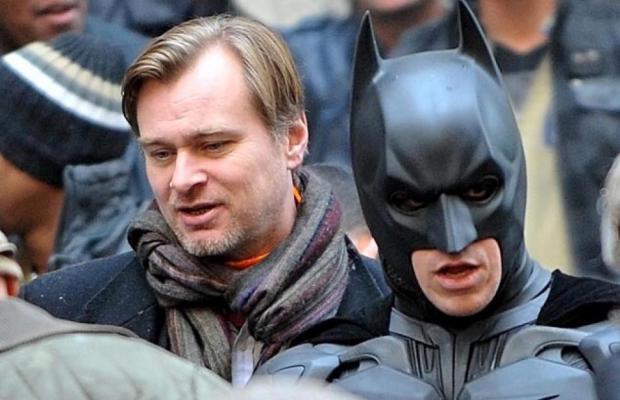
Director's Spotlight: Christopher Nolan


Alright, we haven't done the golden boy, so let's do it. I've been a Christopher Nolan fan since Memento came out, and although he's still not made a movie I dislike, the fanboys sure have tried to ruin him over the years. So I don't tend to praise him like I should, simply because everyone else is doing it. I guess it's a bit like how Tarantino has said that Scorsese probably influenced him as much as anyone other than Leone, but he doesn't tend to talk about Scorsese because everyone talks about Scorsese, so he shines a light on other influences.


But for Nolan, I gotta say that I'm a big fan even though sometimes his storytelling deficiencies get in the way. He tends to pitch everything at a climax, not letting the drama build to a crescendo, resulting in his movies running out of steam before they're over. The Dark Knight is the one where I feel this the most, because when it should be building to a climax with the coming together of the Batman, Joker, and Harvey Dent/Two-Face storylines, it's instead limping to the finish momentum wise. And all of the actors are so good, the storytelling letting them down disappoints even more. I've heard from some that the shorter nature of his most recent movie, Dunkirk, mitigates this a bit as we simply don't spend as much time with any of the characters for their stories to run out of steam. I hope this is true and will likely write about it here when I find out.


His other great flaw is his tendency at over explaining everything. There is no subtext to a Nolan movie, as he will give voice to the themes of the movie (even going so far as to quote A Tale of Two Cities while taking its themes in The Dark Knight Rises), and have exposition on top of exposition. His character mostly don't exist as people outside of who they are in the plot of the movie. They are simply tools or pieces to move about the game, not real people. This isn't true across the board, but it's a tendency of his that keeps much of his work from true greatness.
On the positive side, and there's much more positive than those previous paragraphs might suggest, I would also like to mention that he tends to get great performances from his actors. Pacino and Robin Williams in Insomnia, the lead trio in Memento, everyone in The Prestige. The only times I don't believe the characters are Matthew McConaughey in Interstellar and Marion Cotillard in The Dark Knight Rises. Both have been great in other places but not as much with Nolan.
So Nolan gets slurped all over the internet as some kind of genius, or he gets derided as the Emperor with no clothes, but as is always the case when people are reacting in extremes, the truth lies in the middle. He's a very talented filmmaker who sometimes gets too self serious, and seems unaware of his drawbacks. He doesn't seem to be growing much as a filmmaker. You can go all the way back to his first feature, Following, and all the hallmarks are there. But he makes good movies, and is having great commercial and critical success with them. Hats off to him. His movies are consistently well made, well acted, and enjoyable. Even despite my criticisms, he hasn't made a movie that I dislike yet.

My ratings:

  1. The Dark Knight - 10/10

  2. Inception - 9/10

  3. Memento - 9/10

  4. Insomnia - 9/10

  5. Batman Begins - 8/10

  6. Interstellar - 7/10

  7. The Prestige - 7/10

  8. The Dark Knight Rises - 7/10

  9. Following - 6/10

Actor's Spotlight: Tom Hanks

Tom Hanks, America's dad, nicest guy in Hollywood, the Jimmy Stewart of modern times, also one of our best and most popular actors for most of my lifetime. Starting out in dumb TV comedies like Bosom Buddies and quickly graduating to dumb feature length comedies like Bachelor Party, it wasn't really until he did Big that people took notice of him as an actor.


He scored his first Oscar nomination and 5 short years later won the first of back to back Oscars for Philadelphia and Forrest Gump. He's shown that he's adept at simple rom-com lead roles, and he's shown himself quietly ambitious in his choice of projects, choosing things like Cloud Atlas and Joe Versus the Volcano that many others would've passed on. What do you think of Mr Hank Toms?

My ratings for his movies:
  1. Cloud Atlas - 10/10
  2. Joe Versus the Volcano - 10/10
  3. Toy Story 3 - 10/10
  4. Toy Story - 10/10
  5. Forrest Gump - 10/10
  6. Big - 9/10
  7. Road to Perdition - 9/10
  8. That Thing You Do! - 9/10
  9. Saving Private Ryan - 9/10
  10. Apollo 13 - 9/10
  11. The Green Mile - 9/10
  12. Charlie Wilson's War - 8/10
  13. The Simpsons Movie - 8/10
  14. Philadelphia - 8/10
  15. You've Got Mail - 8/10
  16. Catch Me if You Can - 8/10
  17. The Great Buck Howard - 8/10
  18. Cast Away - 7/10
  19. Splash - 7/10
  20. A League of Their Own - 6/10
  21. Sleepless in Seattle - 6/10
  22. Dragnet - 6/10
  23. The Money Pit - 6/10
  24. Toy Story 2 - 6/10
  25. The Terminal - 6/10
  26. The Polar Express - 6/10
  27. Volunteers - 6/10
  28. The Burbs - 5/10
  29. Turner and Hooch - 5/10
  30. Bachelor Party - 5/10
  31. The Man with One Red Shoe - 5/10
  32. The DaVinci Code - 5/10
  33. Punchline - 4/10
  34. The Bonfire of the Vanities - 3/10

Dark City

I vaguely remembered Dark City being advertised, upon its release in February 1998, but only knew one person who saw it in theaters and they told me it was just okay. So, I was surprised when I saw at the end of the year that it landed at #1 on Roger Ebert's year-end top ten list. That made me want to check it out and see why America’s most famous film critic would lavish such high praise on it. I did and just thought, "It was okay.” But then I started thinking more about the philosophy behind it, and most especially the images contained within it. In its own special way, Dark City is one of the most beautiful movies ever made. Not in the beautifully filmed rolling hills landscape kind of way, but more in the Blade Runner gorgeously realized and expertly shot kind of way. I knew I had to revisit it.


The first section of the movie is brilliantly constructed in a way to throw us a little off balance in our first viewing. Our protagonist, John Murdoch (Rufus Sewell), doesn't know who is he, where he is, or why he's there. Director Alex Proyas shoots with no camera movement, and the rapid cutting and seemingly disconnected storytelling puts us subconsciously in the shoes of our hero. Slowly, Murdoch starts to put together the strands of his life with the help of his wife Emma (Jennifer Connelly), the mysterious Doctor Schreber (Kiefer Sutherland), and the hard-boiled Detective Bumstead (William Hurt), who is assigned to a murder case that John is the lead suspect in. But John is also being trailed by The Strangers, a pale group of men in trench coats and hats who have mysterious powers and seem to be around every corner, led by Mr. Hand (Richard O’Brien). Who are The Strangers and why do they want John Murdoch?

As John begins to get his wits about him, Proyas slowly starts letting shots linger a bit longer, the camera moves a bit more, and yet never lost is the remarkable attention to visual detail that Proyas displayed in the earlier sections. Also never lost is the paranoia draped over this movie. At one point, Bumstead meets with a former colleague who has apparently gone mad, obsessively drawing spirals and ranting that his wife isn’t his wife. Bumstead sees a connection with Murdoch’s own ranting of not knowing who he is.

The movie is chock full of references to other works, whether it's the landmark silent era epic Metropolis, the anime classic Akira, or the short stories The Tunnel Under the World and The Lottery in Babylon. Another influence, the 1995 French movie The City of Lost Children, is even quoted when one of The Strangers mentions that the city’s occupants "Walk through the city like lost children." I was always caught by the incredible German expressionistic architecture, the paintings of Edward Hopper, and the subconscious evocation of old school noir movies. Subconscious to me, because I didn't know much about noir at the time, though it has since become possibly my favorite genre of movie.

So I had just thought it was okay on initial viewing, but I bought it on DVD in probably 2000 or so, watched it again, and liked it a lot. Then a few weeks later watched it again, and loved it. A few months or a year or whatever later, I watched it again and decided it was one of my favorite movies.

In 2008, director Alex Proyas released his Director's Cut of the movie. I'm not normally a fan of Director’s Cuts, but this one took one of my favorite movies and turned it into an all-time top five for me. The theatrical cut is like a sprint, the quick cutting and relentless pacing rushing towards the final confrontation. The Director’s Cut adds in just a few scenes, but Proyas cuts them in in a way that lets the movie breathe and not exactly take its time, since it is still paced quite rapidly, but it now feels like it's not the sprint to the finish line that the original cut is.

Also, perhaps most importantly, the Director’s Cut omits the opening narration from the original theatrical version. The studio thought audiences were too dumb, or too impatient to watch a movie they didn’t understand. So rather than let Proyas tell the story and have the audience know that the director won’t leave them hanging, the studio mandated Sutherland’s Dr. Schreber explain the entire backstory of The Strangers before we ever meet them. The revelation of who they are, then, comes not as a wonderful twisting of the noirish plot, but the revealing of information we already got in the first 90 seconds of the movie. So, if you’re watching the theatrical cut, please mute the TV until you see Kiefer Sutherland’s character. But get the Director’s Cut if you can. It’s the superior version.

Even with the innumerable references contained in the movie to various works of art, the thing that Dark City most often gets compared with is The Matrix. They came out a year apart, in February of '98 (Dark City) and March of '99 (The Matrix). They are both dark on a visual level, there are trench coats and science fiction and all that, and deal with the central idea of "what if the world you live in isn't real?" a classic sci-fi concept that both movies use as a launching pad (though isn’t original to either movie as an idea and can be traced back to ancient Greece). The Matrix uses that set up for half-hearted philosophy, but mainly for a very well done action movie, and even reused a few of Dark City's sets on its Sydney sound stage. Dark City uses it for philosophical contemplation and half-heartedly for an action movie. I would never dream to tell you that Dark City has visual effects equal to The Matrix’s, but I will always stand by the notion that Dark City has much more on its mind, is infinitely more artistically interesting, and with much better plotting and motivations than The Matrix. But as things go, Dark City was a financial flop and a year later The Matrix was one of the biggest successes ever made. So, it has become the standard bearer, while Dark City has stayed around mostly with cult movie status.

Alex Proyas also uses the story conceit as an excuse to have incredible image after incredible image on screen. He had his background in music videos and if not for the visual mastery he’d already displayed in his previous movie, The Crow, I would’ve been very surprised by what he created here. I’ve actually watched Dark City in slow motion before, and just marveled at images so perfectly framed and constructed that I didn’t want the next shot to come yet.

Roger Ebert said it so eloquently in his original review (he later wrote another one, when he added it to his list of "The Great Movies," as well as doing a commentary track for the DVD, which is a wonderful dive into appreciating the movie and how densely constructed it is) and I can't top it, so I'll just close with his quote "If it is true, as the German director Werner Herzog believes, that we live in an age starved of new images, then Dark City is a film to nourish us. Not a story so much as an experience, it is a triumph of art direction, set design, cinematography, special effects - and imagination."

Tuesday, July 31, 2018

Actor Spotlight: Al Pacino

Alongside doing the director's spotlights, I'm going to also do some actor spotlights and thought I might as well start with my favorite.

Al Pacino may be the greatest American actor ever. There are others who have claim to the title as well, Brando and De Niro being the obvious examples (and we'll get to them), but Pacino has always been my personal favorite. His power, his vulnerability, his range are all amazing to me. Some might not think of Pacino as having much range, seeming to play the same character or same type all the time, but if you look at the subtlety of his performance in Insomnia against the wildness of his work in Dick Tracy, to his mostly stoic Michael Corleone, his hilarious Tony Montana, and his tragic and beautiful performance in Dog Day Afternoon (his best work) you see him in different voices, different body languages, different styles. He has an amazing range if you really look at him.

I didn't realize that he is now 78 years old, 3 years older than De Niro (whom I'd always thought was older than Pacino), but still working. We don't have much of him left but let's appreciate what he's given us and talk about the mans work a bit.

Pacino's Heat director Michael Mann said "De Niro sees the part as a construction, working incredibly hard, detail by detail, bit by bit, building character … [Pacino is] more like Picasso, staring at an empty canvas for many hours in intense concentration. And then there’s a series of brushstrokes. And a piece of the character is alive.” Some argue that Pacino's brushstrokes are too big, and sometimes I agree but I still think they work for the most part.

Sometimes his big moments aren't even necessarily planned. Hank Azaria has said the iconic "she's got a GREAT ASS!!!" scene in Heat came about because they'd done so many takes and Pacino never went that big, he just did it as a way to break up the energy of the scene, knowing that sometimes drug addicts had big outbursts like that. Then Mann cut a scene of Pacino doing cocaine, and the scene ended up feeling like Pacino wanting to go big rather than his character being an unstable addict. I find that kind of stuff fascinating. A directorial editing choice changed the nature of the acting by taking context out of it, which made the motivations unclear.

Pacino has earned his place in movie history and in my heart as one of the great actors of all time. To those who are only familiar with the pop culture version of Pacino, I would suggest checking out specifically his work in The Merchant of Venice and his own directorial debut Looking For Richard, the former a straight adaptation of one of my least favorite Shakespeare plays, and the latter a half staging of Richard III and half exploration of Shakespeare and why he works and what he means to people.


My ratings of his movies:
  1. The Godfather - 10/10
  2. Dog Day Afternoon - 10/10
  3. The Godfather part II - 10/10
  4. Looking for Richard - 9/10
  5. Heat - 9/10
  6. Insomnia - 9/10
  7. Donnie Brasco - 9/10
  8. Scarface - 9/10
  9. Angels in America - 9/10
  10. The Merchant of Venice - 9/10
  11. Glengarry Glen Ross - 8/10
  12. Scent of a Woman - 8/10
  13. Sea of Love - 8/10
  14. The Insider - 8/10
  15. Serpico - 8/10
  16. Scarecrow - 8/10
  17. ...And Justice for All - 7/10
  18. The Godfather part III - 7/10
  19. Carlito's Way - 7/10
  20. The Panic in Needle Park - 7/10
  21. Dick Tracy - 6/10
  22. The Devil's Advocate - 6/10
  23. Any Given Sunday - 6/10
  24. The Recruit - 6/10
  25. Frankie and Johnnie - 5/10
  26. Bobby Deerfield - 4/10
  27. 88 Minutes - 3/10
  28. Gigli- 1/10
  29. Jack and Jill - 1/10

Friday, July 27, 2018

Director's Spotlight: Buster Keaton


Buster Keaton wasn't always the listed director of his movies, but read any behind the scenes stories or biographies and it's obvious that he was the director and creative force behind everything he did up until The Cameraman in 1928. Up until that point he'd been and independent filmmaker, but after the box office failure of The General, in conjunction with a divorce and increasing alcoholism, Keaton signed a contract with MGM.

He was able to make The Cameraman, his first MGM production and last great movie, before MGM took away his creative control (his friend and popular rival Charlie Chaplin told Keaton not to sign the contract for that exact reason). MGM was paying Keaton a lot of money, they couldn't have him risking his life with improvised stunts and being his own stunt man (and on several occasions the stunt man for his co-stars). They wanted everything pre-planned and pre-approved. That wasn't how Keaton worked. He got to set and saw what was available and made up the stunts from there. If he had a block on what to do, he'd halt production and set up a game of baseball to help clear his mind. MGM couldn't have that, even from a genius like Keaton.

Keaton suffered a slow career downturn from there, never to really recover from other than to have his movies rediscovered in the 1960's and reevaluated as a genius on the level of Chaplin, maybe even above him (easily above him in my book). It's been a slow upturn since then. Though Chaplin is still more famous, because he never really went out of popularity, Keaton is now thought of as his equal (though their friend Harold Lloyd was actually the most commercially successful at the time, of the 3 kings of silent comedy). Keaton's The General was even selected as the 18th greatest American movie ever made in the 2007 AFI Top 100 list.

But what Buster Keaton gave us are the best silent comedies ever made, and some of the best silent movies ever made.


My ratings of his work:
  1. Our Hospitality - 10/10
  2. The General - 10/10
  3. Sherlock Jr. - 10/10
  4. The Goat (short) - 10/10
  5. The Cameraman - 9/10
  6. Steamboat Bill Jr. - 9/10
  7. The Scarecrow (short) - 9/10
  8. The Playhouse (short) - 9/10
  9. Neighbors (short) - 9/10
  10. One Week (short) - 8/10
  11. Seven Chances - 7/10
  12. Battling Butler - 7/10
  13. College - 7/10
  14. The Balloonatic (short) - 7/10
  15. The Haunted House (short) - 7/10
  16. The Boat (short) - 7/10
  17. The Blacksmith (short) - 7/10
  18. The Electric House (short) - 7/10
  19. Go West - 6/10
  20. The Paleface (short) - 6/10
  21. The Navigator - 6/10
  22. Cops (short) - 6/10
  23. Three Ages - 6/10


And although Three Ages is my bottom ranked movie it has one of my favorite jokes ever: as Keaton is vying for the affections of the girl in the modern section, his rival pulls out his business card and it shows that he's the manager at First National Bank. The girl runs off with the guy and Keaton looks at his own business card and it shows that he's the manager at Last National Bank. I'm not quite sure why such a simple joke has always made me laugh so hard, but it does.

Thursday, July 26, 2018

Out of Sight


Out of Sight is the best screen adaptation of legendary crime author Elmore Leonard’s work. Starring George Clooney and Jennifer Lopez (a few years before she became “J.Lo” and was just a talented up-and-coming actress), with one of the best supporting casts you’ll ever see, Out of Sight was a return to form for indie director Steven Soderbergh. He’d made a huge splash on the movie scene with Sex, Lies, and Videotape in 1989, which took home the Palme D’Or at the Cannes Film Festival that year. But his reputation had faltered afterwards with multiple films that didn’t connect with critics or audiences. This cool, highly stylized, perfectly acted movie didn’t quite connect with audiences like the filmmakers expected it to, it made back it’s budget though not a ton more in theaters, but Out of Sight was a hit with critics and other filmmakers. Kevin Smith has called it one of the best movies of the last 20 years, and a true masterpiece of cinema. I agree with him.

Jack Foley (Clooney) has been planning meticulously for a break out of the prison in which he’s currently serving time. Thanks to help from his friend Buddy (Ving Rhames), and stoner extraordinaire Glenn (Steve Zahn), the break gets out not just Jack, but also Chino (Luis Guzman), who gets separated from Jack during the breakout. Jack and Buddy’s portion of the plan then gets interrupted thanks to the happenstance appearance from US Marshall Karen Sisco (Lopez).

Quickly, and in the most iconic sequence of the movie, Jack decides to just kidnap Karen and take her with them, she and he hiding in the trunk together as Buddy drives the getaway car. They develop an intimate report with one another in the trunk, covering topics like bank robbery (Jack’s reason for being in prison) and movies (where Jack and Karen bond over discussing New Hollywood classics like Bonnie and Clyde, Network, and Three Days of the Condor). They have an instant connection, which makes for a complicated relationship between a bank robber and a US Marshall, but a lot of sexy fun for us in the audience.

In a wonderful time-hopping script from Scott Frank (who’d previously written the very good adaptation of Leonard’s Get Shorty, starring John Travolta), we’re introduced in flashbacks and in present time to other characters in Jack’s life, including his ex-wife Adele (Catherine Keener), a magician’s assistant recently out of work and Jack’s communication liaison on the outside; Richard Ripley (Albert Brooks), a rich banker who stupidly brags in prison about a cache of uncut diamonds he has hiding in his home in Detroit; and Maurice “Snoopy” Miller (Don Cheadle), a violent psychopathic ex-boxer whom Jack didn’t like in prison and who antagonizes him outside the joint too. The rest of the supporting cast also includes Nancy Allen, Denis Farina, and even an uncredited cameo from Michael Keaton, who reprises the role of Ray Nicolette, which he’d played the previous year in Quentin Tarantino’s great Leonard adaptation, Jackie Brown.

The supporting cast is really tremendous, but this movie sings because of the performances from Clooney and Lopez. Clooney is the total embodiment of an Elmore Leonard protagonist: he’s quick-witted, smart, funny, but also prone to bad decision making. And Clooney personifies all of these qualities in such a way that we like Jack, we love Jack, but we also know he’s not going to stop robbing people, it’s what he does and the only career he knows.

Lopez, on the other hand, is strong, just as smart as Jack, with a hard nose for the rules, even if she occasionally breaks them herself. I’ll say that she looks gorgeous here, better than she ever looked in another movie. But she’s FAR more than just eye candy, as she is the other Elmore Leonard standard protagonist, the tough as nails, but still wonderfully feminine and sexy female hero. Leonard said that the character of Karen Sisco was inspired by a real life photograph he’d seen in the newspaper of a beautiful US Marshall, shotgun resting on her hip, which she’d cocked to the side (the hip, not the gun). He wondered what kind of woman that was, and Karen Sisco was born. Though far from the white, blonde haired character the novel describes her as physically, Lopez completely nails the spirit of the Leonard character just like Clooney does.

As great as Jackie Brown is, Out of Sight is the best adaptation of Elmore Leonard’s work because it’s the movie that most feels like what reading one of his books is like. It’s funny and effortlessly smooth and Clooney and Lopez have a palpable sexual chemistry that also happens to include their witty banter, showing off an intellectual connection to go with their physical chemistry. Scott Frank’s script doesn’t quite adapt the book directly, there are the expected changes, but he gets down the spirit of Leonard’s writing. The dialog, the sharply drawn characters, the seemingly aimless plot that still comes around in the end and ties everything together. It has it all. And it’s on top of all of that that Steven Soderbergh brings his cool, efficient, intelligent filmmaking style, perfectly suited to this material.

Soderbergh is a truly great director, able to make everything from crowd pleasers like the Ocean’s 11 movies, Magic Mike, and Erin Brockovich, to “important” movies like Traffic (for which he won an Oscar as Best Director) and Behind the Candelabra, mainstream ensemble dramas like Contagion and Side Effects, ambitious projects like his beautiful remake of Tarkovsky’s Solaris or his two part Che Guevara biopic, Che, technical exercises like The Good German (shot like in B&W as though it were Casablanca, but with modern lax censorship of language) and this years Unsane (which he shot on an iPhone), to straight comedies like the painfully underrated The Informant! or last year’s Logan Lucky. He adapts to every story, but his stamp is there on them all. You can just “feel” a Soderbergh movie. And he’s had a huge output over his relatively still young career (almost 30 movies in less than 30 years, as well as two seasons of the Cinemax series The Knick, amongst others). Out of Sight is his best work. It’s just the perfect marriage of star power, great writing adapted from a wonderful source, and expert filmmaking from a director on the top of his game. If you haven’t seen this somehow Hidden Gem, remedy that situation as soon as possible!